





What specs matter when buying a 12V inverter for cars?
Selecting the appropriate 12V car inverter is crucial for ensuring your electronic devices operate efficiently and safely while on the road. Below are six specific questions frequently asked by beginners, along with in-depth answers to guide your decision-making process.
1. How do I determine the appropriate wattage for my 12V car inverter?
To select the right wattage, first calculate the total power consumption of the devices you intend to use. For instance, if you plan to power a laptop (approximately 60W) and a smartphone charger (approximately 10W), the combined total is 70W. It's advisable to choose an inverter with a continuous power rating that exceeds this total to accommodate any additional power surges. For example, a 100W inverter would suffice for this setup. However, if you anticipate using higher-power devices, such as a mini-fridge (approximately 150W), consider an inverter with a higher continuous power rating, such as 300W or more. Always ensure the inverter's continuous power rating meets or exceeds the combined wattage of your devices to prevent overloading.
2. What is the significance of inverter efficiency, and how does it affect battery life?
Inverter efficiency indicates the percentage of DC power from your vehicle's battery that is successfully converted into usable AC power. For example, an inverter with 90% efficiency converts 90% of the battery's DC power into AC, with the remaining 10% lost as heat. Higher efficiency means less energy is wasted, leading to longer battery life and reduced strain on your vehicle's electrical system. It's important to note that real-world conditions, such as voltage drops due to undersized cables or high ambient temperatures, can reduce actual efficiency. Therefore, selecting an inverter with high efficiency is essential for optimal performance and battery longevity.
3. Should I choose a pure sine wave or modified sine wave inverter for my car?
Pure sine wave inverters produce a smooth, consistent waveform identical to the power supplied by utility companies, making them suitable for sensitive electronics like laptops, medical devices, and audio equipment. Modified sine wave inverters generate a more jagged waveform, which may cause interference or potential damage to sensitive devices. Therefore, if you plan to power sensitive electronics, a pure sine wave inverter is recommended to ensure safe and efficient operation.
4. How do I install a high-wattage inverter in my vehicle safely?
For inverters exceeding 300W, it's essential to connect them directly to your vehicle's battery to ensure stable power delivery and prevent potential damage to the cigarette lighter socket. Use appropriately sized cables (e.g., 4 AWG for a 1000W inverter) and include a fuse within 18 inches of the battery terminal to protect against short circuits and overloads. Install the inverter in a cool, ventilated area to prevent overheating, and ensure there is adequate space around the unit for airflow. Avoid placing the inverter in direct sunlight or enclosed spaces without ventilation.
5. What safety features should I look for in a 12V car inverter?
Essential safety features include over-temperature shutdown, low and high voltage protection, overload protection, and short circuit protection. These features help prevent damage to both the inverter and your vehicle's electrical system. For example, over-temperature shutdown ensures the inverter turns off if it overheats, while low voltage protection prevents the inverter from operating when the battery voltage is too low, safeguarding your vehicle's battery life.
6. How can I extend the battery life when using a 12V car inverter?
To prolong battery life, limit the use of high-power devices when the engine is off, as this can quickly drain the battery. If extended use of the inverter is necessary, consider running the engine to recharge the battery. Additionally, ensure your vehicle's alternator is capable of handling the additional load imposed by the inverter, especially when using high-wattage models. Regular maintenance of your vehicle's electrical system, including checking the health of the battery and alternator, can also help maintain optimal performance.
Conclusion
Selecting the right 12V car inverter involves careful consideration of your power needs, the efficiency of the inverter, the type of waveform required for your devices, and proper installation and safety measures. By addressing these factors, you can ensure reliable and safe operation of your electronic devices while on the road.
For personalized recommendations and a quote tailored to your specific requirements, please contact us at info@csinverter.com or visit our website at www.csinverter.com.


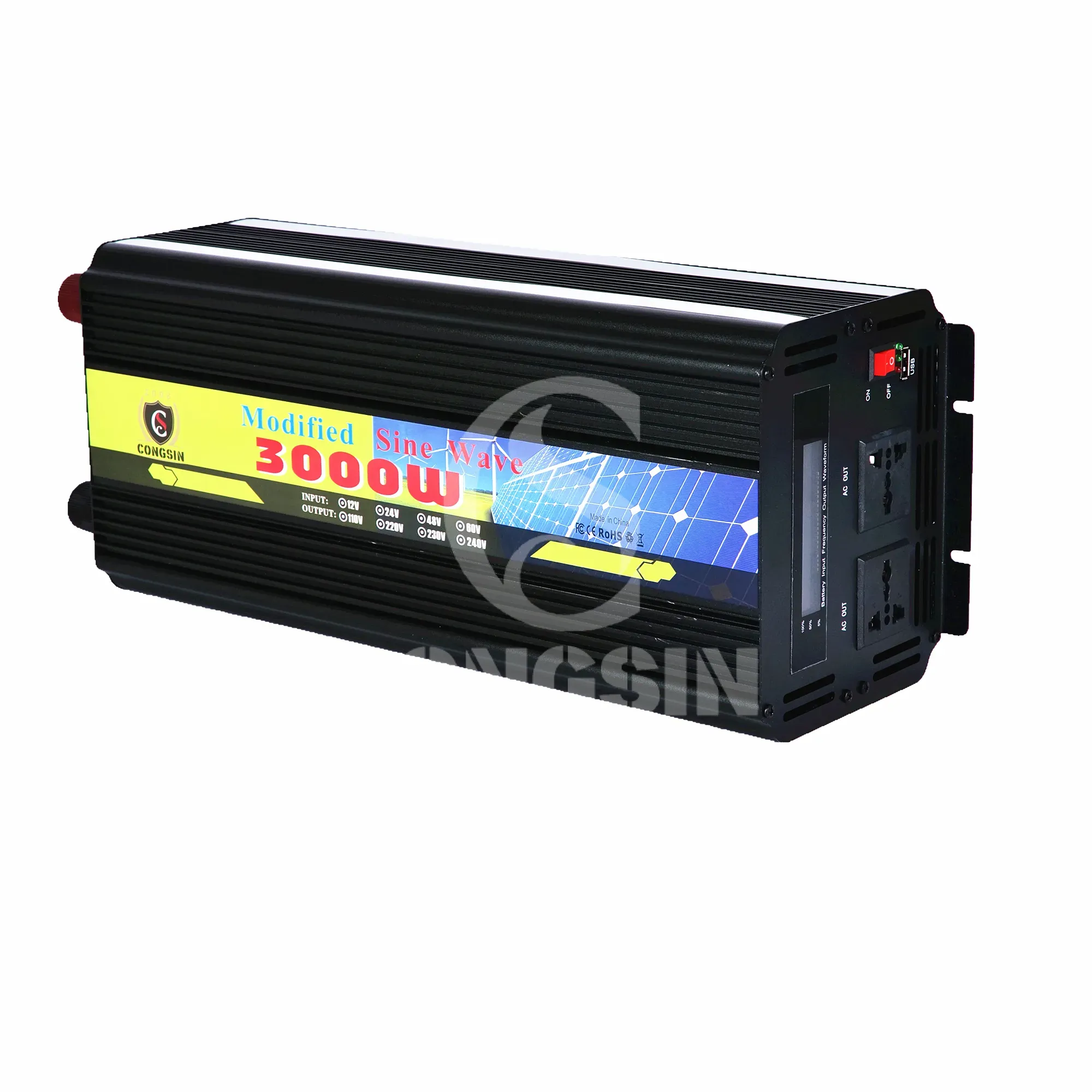
Modified Sine Wave Inverters
Is it normal for the inverter to heat up when working?
It is normal for it to generate some heat when working. If the temperature is too high (e.g., hot to the touch), please stop using it and check if the load is overloaded.
What is the working principle of the UPS function?
When the external power supply is normal, the inverter powers the device and charges the battery; when the external power supply is interrupted, it automatically switches to battery power to ensure uninterrupted operation of the device.
Can I customize the color and logo?
Yes, OEM/ODM customization is supported.
Can this 2000W inverter power an air conditioner?
If the air conditioner power is within 2000W and the input is AC220V, it can supply power normally. It is recommended to ensure stable power when starting.
Distributor
What kind of support can I expect from Feifan after becoming a distributor?
You will receive ongoing sales support, product training, technical assistance, and marketing resources to ensure your success.
Get in Touch with Our Team
You can also communicate with us directly through our online contact form. Please fill in the following information, and our team will contact you as soon as possible after receiving your message.

CONGSIN is a trusted OEM factory for power inverters, solar charge controllers, and DC converters. Reliable solutions for global B2B buyers.
 High Quality
 7/24 Service
 Guaranteed Warranty
© 2025 Congsin. All Rights Reserved.